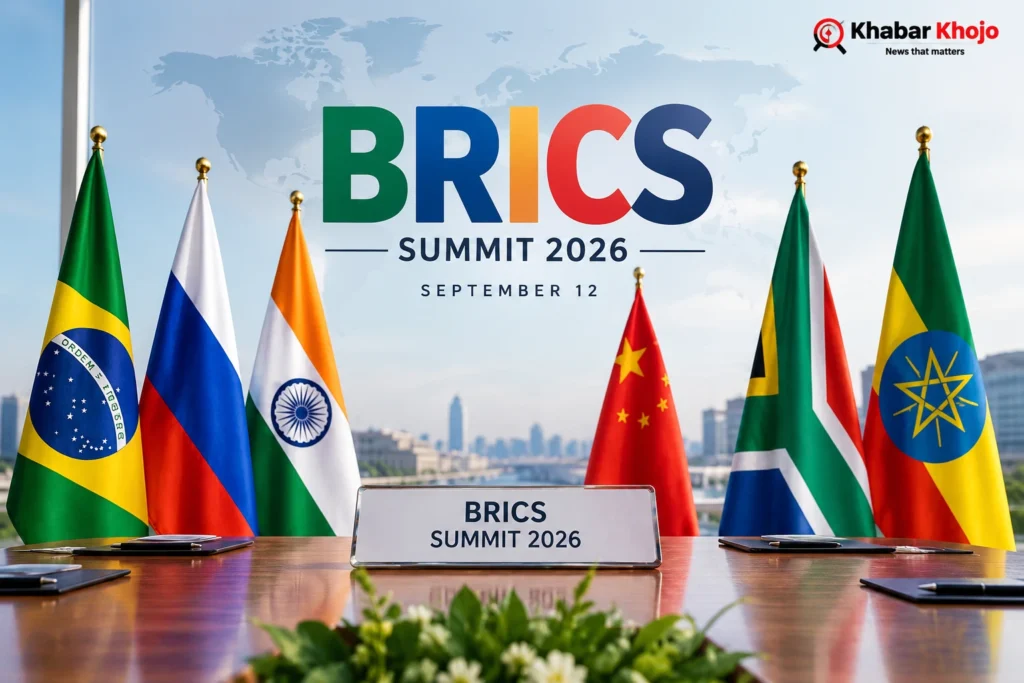
BRICS Summit 2026 September 12: Why the Summit Matters
The BRICS Summit 2026 September 12 has brought together leaders and senior representatives from major emerging economies in New Delhi for discussions on some of the world’s biggest political and economic challenges.
The 18th BRICS Summit is being hosted by India on September 12 and 13 under the theme “Building for Resilience, Innovation, Cooperation and Sustainability.” The meeting comes at a complicated moment for the global economy and international politics, with conflicts in the Middle East and Ukraine, trade restrictions, sanctions and growing calls for reform of global institutions.
This is also an important moment in the evolution of BRICS itself.
The group that originally brought together Brazil, Russia, India, China and South Africa has expanded considerably. The newer members and participating countries bring different political interests, economic priorities and regional concerns to the table.
That makes the BRICS Summit 2026 September 12 more than a meeting between a few large economies. It is a test of whether a much larger and more diverse grouping can continue finding common ground.
The summit’s first major result was the adoption of the New Delhi Declaration, which addresses international security, global governance, trade, development, terrorism and the situation in the Middle East.
BRICS Summit 2026 September 12: Who Is Taking Part?
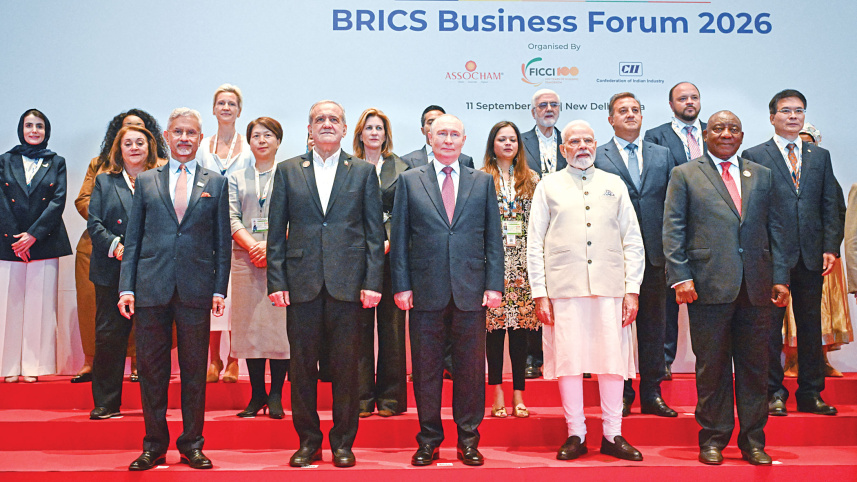
One of the most important features of the BRICS Summit 2026 September 12 is the range of countries represented in New Delhi.
The major leaders and representatives highlighted around the summit include:
| Country | Leader / Representative | Major BRICS focus |
|---|---|---|
| 🇮🇳 India | Narendra Modi | Global governance, Global South and development |
| 🇨🇳 China | Xi Jinping | Multipolarity, trade and international cooperation |
| 🇷🇺 Russia | Vladimir Putin | Trade, sanctions and geopolitical issues |
| 🇮🇷 Iran | Masoud Pezeshkian | Middle East security and economic cooperation |
| 🇿🇦 South Africa | Cyril Ramaphosa | Global South and multilateralism |
| 🇪🇬 Egypt | Abdel Fattah el-Sisi | Regional stability and economic cooperation |
| 🇮🇩 Indonesia | Prabowo Subianto | Economic cooperation and Indonesia’s BRICS role |
| 🇪🇹 Ethiopia | Abiy Ahmed | Development and Global South cooperation |
| 🇦🇪 UAE | Sheikh Khaled bin Mohamed bin Zayed Al Nahyan | Investment and regional cooperation |
| 🇸🇦 Saudi Arabia | Prince Faisal bin Farhan Al Saud | Economic and regional issues |
| 🇧🇷 Brazil | Mauro Vieira | Brazil’s BRICS and Global South agenda |
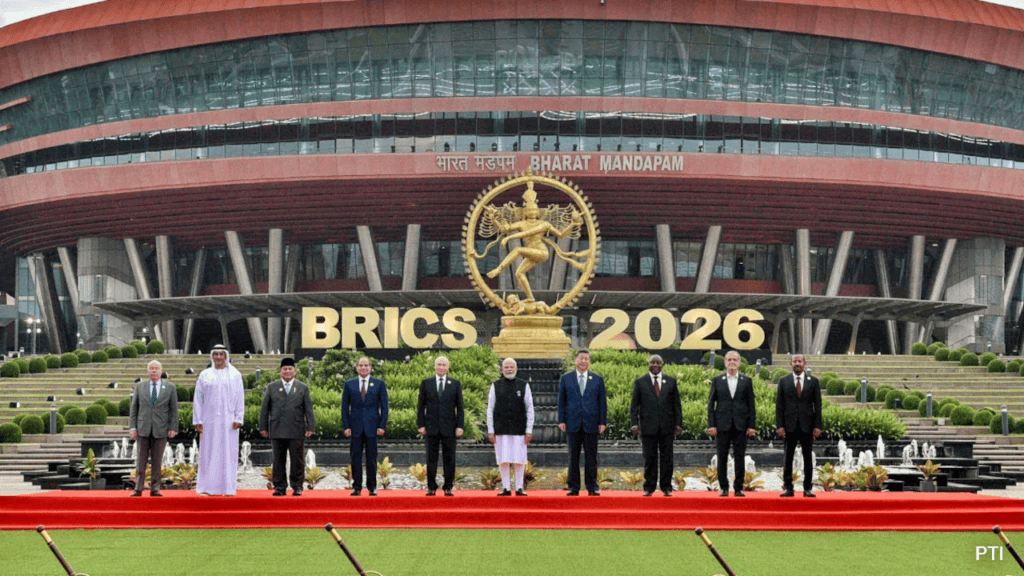
The different levels of representation are important. Not every BRICS member was represented by its head of state or government, but the presence of senior officials shows the wider reach of the grouping.
That diversity is central to understanding the BRICS Summit 2026 September 12.
India Hosts as BRICS Chair
India is at the centre of the BRICS Summit 2026 September 12 because it holds the BRICS chairship this year.
Prime Minister Narendra Modi has presented India’s BRICS agenda around four broad priorities: resilience, innovation, cooperation and sustainability. India’s approach has also placed emphasis on a people-centred agenda and stronger representation for developing countries.
For India, the summit is an opportunity to push several long-standing priorities.
These include reform of international institutions, stronger representation of the Global South, cooperation against terrorism, more balanced global trade and greater participation of developing countries in new technologies.
However, India’s role is only one part of the larger BRICS discussion.
The real significance of the BRICS Summit 2026 September 12 lies in whether countries with very different foreign-policy positions can agree on common issues.
China: Xi Jinping Calls for Greater Cooperation
Chinese President Xi Jinping is one of the most closely watched leaders at the BRICS Summit 2026 September 12.
Xi’s presence is particularly significant because this is his first visit to India since 2019.
On the sidelines of the summit, Xi met Prime Minister Narendra Modi. The two leaders discussed improving India-China relations and emphasized development, cooperation and stability. Xi described China-India relations from a strategic and long-term perspective and argued that the two countries could contribute to a more multipolar world.
But Xi’s role at the summit goes beyond his meeting with Modi.
China has consistently viewed BRICS as an important platform for increasing the influence of emerging economies in global affairs.
At the BRICS Summit 2026 September 12, China has also pushed for greater diplomatic engagement over the Middle East conflict.
This gives Beijing an opportunity to present itself as an important player in discussions about international security and diplomacy.
Russia: Putin Focuses on Trade and Global Economic Pressure
Russian President Vladimir Putin is another major figure at the BRICS Summit 2026 September 12.
Russia’s participation comes as Moscow continues to face Western sanctions connected with the war in Ukraine.
For Russia, BRICS provides an important platform for discussing trade, financial cooperation and alternatives to economic systems dominated by Western countries.
Russian officials have repeatedly criticized unilateral economic restrictions and argued for greater use of national currencies in international trade.
The New Delhi Declaration also expresses concern over unilateral tariff and non-tariff measures that can distort international trade.
For Putin, the BRICS Summit 2026 September 12 therefore provides an opportunity to strengthen Russia’s relationships with major emerging economies.
Russia’s position also shows why financial and trade cooperation has become increasingly important within BRICS.
Iran: Pezeshkian Brings the Middle East Crisis to the Summit
Iranian President Masoud Pezeshkian is another important participant in the BRICS Summit 2026 September 12.
Iran’s presence is particularly significant because the Middle East conflict has become one of the biggest issues discussed at the summit.
Iran is also one of the countries whose relationship with the United States has become a major part of the current geopolitical situation.
At the summit, BRICS members expressed deep concern over the escalation of violence in the Middle East and called for maximum restraint.
The group also reaffirmed the importance of solving international disputes through dialogue, consultation and diplomacy.
Iran’s participation makes the Middle East discussion especially important because BRICS includes countries with different relationships with both Iran and the wider region.
South Africa: A Strong Voice for the Global South
South African President Cyril Ramaphosa represents one of the original BRICS members at the BRICS Summit 2026 September 12.
South Africa has traditionally emphasized the importance of developing countries having a stronger voice in international institutions.
That fits closely with India’s push for greater Global South representation.
For South Africa, BRICS is an important platform for discussing development, international economic reform and a more representative global political system.
The country also gives the expanded grouping a stronger African dimension.
The presence of South Africa, Egypt and Ethiopia demonstrates that Africa is no longer a secondary part of the BRICS conversation.
Egypt: Connecting BRICS With the Arab World
Egyptian President Abdel Fattah el-Sisi is another major leader at the BRICS Summit 2026 September 12.
Egypt joined the expanded BRICS group as the organization increased its presence in the Middle East and Africa.
Its position is particularly relevant because Egypt sits at an important geographical and economic crossroads connecting Africa, the Middle East, Europe and Asia.
Egypt’s participation strengthens the group’s focus on regional stability, trade, investment and development.
It also means that discussions about the Middle East cannot be separated from the wider economic interests of BRICS members.
Indonesia: A Newer Member With Growing Influence
Indonesian President Prabowo Subianto represents one of the newer additions to BRICS at the BRICS Summit 2026 September 12.
Indonesia’s entry has expanded the group’s representation in Southeast Asia.
As one of the world’s major economies and most populous countries, Indonesia brings its own economic and regional priorities to BRICS.
Its participation also demonstrates how the organization has moved beyond its original five-country structure.
For Indonesia, BRICS provides another platform for economic cooperation, investment and engagement with major emerging economies.
Its presence makes the BRICS Summit 2026 September 12 more representative of the broader developing world.
Ethiopia: Strengthening Africa’s Role
Ethiopian Prime Minister Abiy Ahmed is also participating in the summit.
Ethiopia’s membership gives BRICS another major African voice alongside South Africa and Egypt.
For Ethiopia, development, infrastructure, investment and economic cooperation are particularly important areas of international engagement.
The country’s presence at the BRICS Summit 2026 September 12 reinforces the group’s growing focus on Africa.
It also reflects BRICS’ broader attempt to build stronger economic relationships among developing countries.
UAE and Saudi Arabia: The Gulf’s Growing Role
The Gulf region is another important part of the expanded BRICS structure.
The United Arab Emirates is represented at the summit by Sheikh Khaled bin Mohamed bin Zayed Al Nahyan, while Saudi Arabia is represented by Foreign Minister Prince Faisal bin Farhan Al Saud, according to the summit participant information reported by Indian Express.
Their participation is important because both countries are major players in energy, finance, investment and regional diplomacy.
The UAE’s position is particularly significant because it maintains extensive economic relationships with both Western and emerging economies.
Saudi Arabia also has major influence in global energy markets.
Their involvement means the BRICS Summit 2026 September 12 is not simply an Asia-Africa grouping. It also has a growing Gulf dimension.
At the same time, the different interests of Gulf countries and Iran make BRICS diplomacy more complicated.
The fact that countries with different regional positions are sitting together demonstrates the importance of dialogue within the grouping.
Brazil: One of the Original BRICS Voices
Brazil is one of the five countries that originally formed BRICS.
At the BRICS Summit 2026 September 12, Brazil is represented by Foreign Minister Mauro Vieira, according to India’s Ministry of External Affairs participant information and reporting on the summit.
Brazil’s role remains important because the country represents Latin America within the grouping.
Its participation gives BRICS a geographical reach stretching across Asia, Africa, the Middle East and Latin America.
Brazil has historically supported greater representation for developing countries in global institutions.
That makes its position closely connected with the wider BRICS argument for a more representative international system.
New Delhi Declaration Becomes the Main Outcome
One of the biggest achievements of the BRICS Summit 2026 September 12 is the adoption of the New Delhi Declaration.
The declaration covers a wide range of issues.
It calls for greater cooperation, supports multilateralism and addresses major international conflicts and economic challenges.
The document also emphasizes dialogue and diplomacy as tools for resolving disputes.
This is particularly important given the differences among BRICS members.
Countries such as India, China, Russia, Iran, Saudi Arabia and the UAE do not always share the same foreign-policy priorities.
Yet the group managed to agree on a common declaration.
That is one of the central stories of the BRICS Summit 2026 September 12.
Middle East Conflict Dominates the Security Discussion
The Middle East has become one of the most difficult subjects for the BRICS Summit 2026 September 12.
BRICS members expressed serious concern over escalating violence and called for maximum restraint.
The declaration supports peaceful solutions through dialogue and diplomacy.
The wording is important because the grouping includes countries with very different relationships with the United States, Iran and other regional actors.
Instead of directly taking one country’s side, BRICS attempted to frame its position around diplomacy, restraint and international cooperation.
That approach reflects the challenge facing the expanded group.
BRICS wants to become a stronger global political voice, but it must do so while balancing very different national interests.
Trade, Tariffs and Financial Cooperation
Economic issues remain at the heart of the BRICS Summit 2026 September 12.
BRICS countries have raised concerns about unilateral tariffs and other trade measures that can affect developing economies.
The group also continues to discuss stronger financial cooperation and the use of national currencies for cross-border trade.
However, the summit should not simply be described as a push for a new BRICS currency.
The focus is broader: reducing transaction difficulties, improving payment systems and increasing financial cooperation between member countries.
For countries facing sanctions or trade restrictions, these discussions can have particular importance.
For countries such as India, Brazil and Indonesia, greater financial cooperation can also support trade diversification.
Global Governance and UN Reform
Another major theme of the BRICS Summit 2026 September 12 is reform of international institutions.
India has argued that global institutions should better reflect the current distribution of economic and political influence.
BRICS members broadly support greater representation for developing countries.
This includes discussions around reforming the United Nations Security Council and international financial institutions.
The issue is important because the BRICS grouping represents a significant share of the world’s population and economic activity.
Its members argue that developing countries should have a larger role in decisions affecting the global economy and international security.
Technology and Artificial Intelligence
Technology is becoming an increasingly important part of the BRICS agenda.
The BRICS Summit 2026 September 12 includes discussions about artificial intelligence, digital development and technology cooperation.
The challenge is to make sure emerging technologies do not increase the gap between developed and developing economies.
For countries such as India, China, Brazil, Indonesia and South Africa, AI could become an important driver of economic growth.
At the same time, governments are increasingly concerned about cybersecurity, data protection, misinformation, employment and responsible AI development.
BRICS’ interest in technology shows that the group is trying to move beyond traditional discussions about trade and politics.
Terrorism and International Security
Terrorism is another important subject in the New Delhi Declaration.
BRICS countries have condemned terrorism and emphasized the need for stronger international cooperation against terrorist organizations and their financing.
The declaration also condemns the Pahalgam terror attack, giving the issue particular importance for India.
The broader BRICS position emphasizes that terrorism should be addressed without double standards.
For India, this is an important diplomatic message.
For other BRICS members, cooperation against terrorism is also connected with broader concerns about organized crime, extremist violence and international security.
Why the Expanded BRICS Is Different
The BRICS Summit 2026 September 12 shows how dramatically the group has changed.
The original BRICS was much smaller and more focused on major emerging economies.
Today, the expanded grouping brings together countries from several continents and regions.
That gives BRICS greater economic and geopolitical weight.
But it also creates new challenges.
India and China have unresolved strategic disagreements. Iran and Gulf countries have different regional interests. Russia faces sanctions from Western countries, while other BRICS members maintain strong economic relationships with the West.
Brazil and South Africa have their own priorities.
This diversity means BRICS cannot always act like a single political bloc.
Instead, its strength may lie in its ability to create a common platform where countries with different interests can still cooperate.
What the Summit Means for the Global South
The BRICS Summit 2026 September 12 is also about the growing political importance of the Global South.
The countries involved want greater influence over decisions affecting international trade, finance, technology, development and security.
For many developing economies, the current global system is still heavily influenced by institutions created decades ago.
BRICS argues that these institutions need to evolve.
The summit therefore represents a larger debate about whether global power should become more distributed.
India’s leadership, China’s economic influence, Russia’s geopolitical role, Brazil’s Latin American position and the growing participation of African and Gulf countries all contribute to this discussion.
What Happens After the BRICS Summit?
The BRICS Summit 2026 September 12 will ultimately be judged by what happens after the leaders leave New Delhi.
Declarations are important, but implementation matters more.
Trade initiatives need actual agreements. Financial cooperation requires functioning systems. Technology proposals require investment and coordination. Global governance reforms require support beyond BRICS itself.
The next BRICS chair will be China in 2027.
That means the New Delhi Declaration will become part of the foundation for the group’s next phase.
The transition from India to China will also be closely watched because India and China have different ideas about the future direction of BRICS.
Final Takeaway
The BRICS Summit 2026 September 12 is much bigger than a meeting between India and China or a collection of bilateral meetings.
It brings together major countries from Asia, Africa, the Middle East and Latin America and places them around the same table at a time of serious global uncertainty.
India’s Narendra Modi has played an important role as the host and BRICS chair, while Xi Jinping, Vladimir Putin, Masoud Pezeshkian, Cyril Ramaphosa, Abdel Fattah el-Sisi, Prabowo Subianto and other leaders and representatives have brought their own regional and national priorities to New Delhi.
The BRICS Summit 2026 September 12 has produced a joint declaration addressing the Middle East, trade, international governance, terrorism and cooperation.
Its biggest test, however, will come after the summit.
If the member countries can turn their shared statements into practical cooperation, BRICS could become an even more influential platform for the Global South.
If their differences become too difficult to manage, the expanded group could struggle to convert its growing size into meaningful collective action.
For now, the BRICS Summit 2026 September 12 shows that the grouping remains an important part of the changing global political and economic landscape.
FAQs
1. What happened at the BRICS Summit 2026 September 12?
The BRICS Summit 2026 September 12 in New Delhi produced the New Delhi Declaration and focused on global governance, trade, security, terrorism, technology, development and the Middle East.
2. Which countries are represented at the BRICS Summit?
The summit brings together the BRICS grouping’s members and senior representatives from countries including India, China, Russia, Brazil, South Africa, Egypt, Ethiopia, Iran, Indonesia, the UAE and Saudi Arabia. The level of representation varies by country.
3. Did Narendra Modi and Xi Jinping meet at the summit?
Yes. Modi and Xi Jinping held bilateral talks on the sidelines of the summit, discussing India-China relations, cooperation and global stability.
4. What is the New Delhi Declaration?
It is the joint declaration adopted at the summit. It covers international security, global governance, trade, economic cooperation, terrorism, development and major international conflicts.
5. Which country will host the next BRICS Summit?
China is set to host the BRICS Summit in 2027.
Follow Khabar Khojo
For breaking news, India news, world updates, business, markets, technology, sports, entertainment, lifestyle and exclusive stories, follow @officialkhabarkhojo on Instagram.
Also read more of such a news on our World News and India News


More Stories
Modi Putin BRICS Summit 2026: Positive Power Shift
August 2026 Hottest Month on Record: Critical Risk
Gujarat Bank Strike 2026: Major 3-Day Shutdown Alert