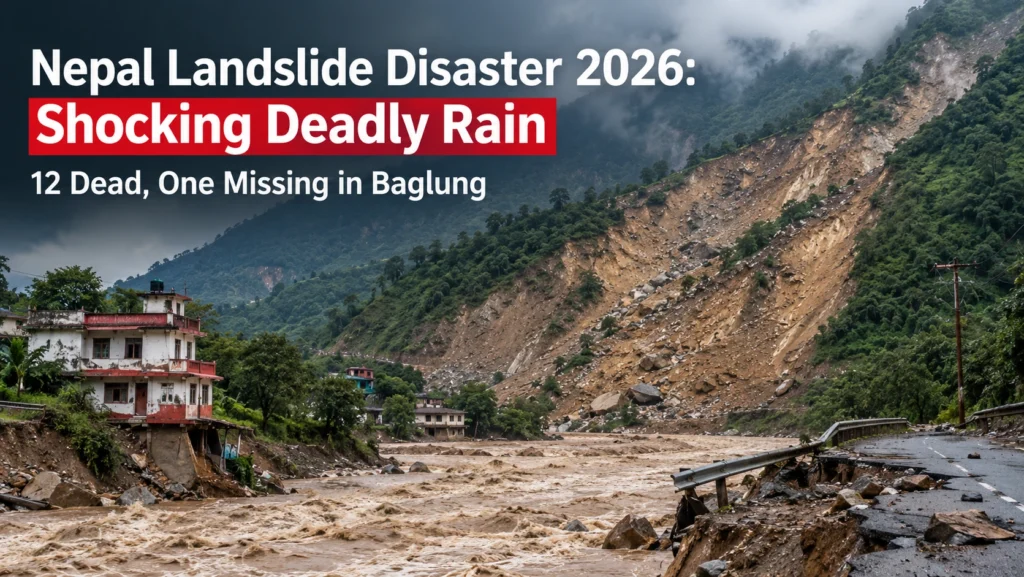
Nepal is facing a fresh weather emergency after several days of heavy rainfall triggered floods and landslides across parts of the country. The Nepal landslide disaster has caused deaths, injuries, missing persons, damaged homes and disrupted roads, power supplies and communications. Baglung district has emerged as one of the worst-affected areas, with local authorities confirming 12 deaths and one person still missing as of September 29, 2026.
The Nepal landslide disaster comes only weeks after another major flooding emergency affected the country, adding pressure on communities that are still dealing with damaged infrastructure. Authorities and rescue teams are continuing operations in affected districts while residents in vulnerable areas have been warned to remain alert as river levels rise.
What Happened in the Nepal Landslide Disaster?
The Nepal landslide disaster was triggered by persistent and intense rainfall over several days. In Baglung, rain-induced landslides buried homes in different rural municipalities, causing multiple fatalities.
According to local authorities, the Baglung death toll reached 12 by September 29, while one person remained missing. The latest reported deaths occurred in Sipa of Tarakhola Rural Municipality-5, where a landslide buried a house and killed two people. Several members of the family were rescued with injuries.
Earlier incidents were reported in Tamankhola and Nisikhola rural municipalities. The Nepal landslide disaster in these areas damaged or destroyed homes and left families searching for missing relatives. Reports said several people were killed when landslides swept into or buried residential structures.
The Himalayan Times reported that the Gandaki provincial government announced financial assistance of Rs 100,000 for each bereaved family and Rs 25,000 toward funeral expenses. Flooding also damaged major pipelines and disrupted water supply to around 4,500 consumers in Baglung Bazaar.
Why Did the Nepal Landslide Disaster Become So Severe?
Heavy rainfall is a major immediate trigger behind the Nepal landslide disaster. When intense rain saturates soil and weakens slopes, loose earth and rock can become unstable. In mountainous terrain, this can quickly turn into a landslide that moves toward roads, homes and river channels.
The Nepal landslide disaster has also been accompanied by rising rivers and flooding. This combination makes rescue work more difficult because roads can become blocked while rivers can rise rapidly.
Earlier reporting from Kathmandu Post said continuous rain had blocked roads in Baglung and other districts. Landslides affected the Mid-Hill Highway and other important road routes, while rising water levels created risks in settlements along rivers.
The Nepal landslide disaster is therefore not limited to one isolated slope. It is part of a wider weather event involving heavy rainfall, river flooding, erosion and infrastructure damage.
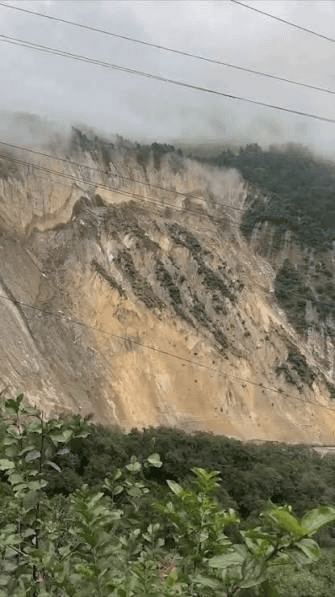
Nepal Landslide Disaster: Mountain Slope Collapse
The image used in this article shows a large section of a mountainside with extensive exposed earth and rock. It provides a visual sense of the scale of the Nepal landslide disaster and shows why communities living near steep terrain can face sudden danger during prolonged rainfall.
A large mountainside section shows signs of severe slope failure after heavy rainfall in Nepal.
The image should be treated as a visual illustration of the reported conditions rather than independent proof of a specific location unless its original source is confirmed.
Reports published on September 29 also described videos circulating online that purportedly show a large mountainside collapsing into a river in Baglung. Readers should be cautious with social-media footage because some circulating visuals have been reported as potentially AI-enhanced or altered.
Deaths and Missing People in the Nepal Landslide Disaster
The Nepal landslide disaster has been particularly deadly in Baglung. Police and local reports said 12 people had died across different parts of the district over three days, while one person remained missing.
In Tamankhola Rural Municipality, several homes were buried after slopes gave way. In Nisikhola Rural Municipality, a family was among those killed when a landslide engulfed their home. Another person was killed after a landslide buried a cowshed.
In Tarakhola, a later landslide buried a house and killed two people. Other family members were rescued and taken for medical treatment after being trapped in debris.
The Nepal landslide disaster has left affected families facing both immediate loss and longer-term uncertainty. Homes have been damaged, roads have been blocked and access to basic services has been disrupted.
Nepal Landslide Disaster and Flooding Damage
The Nepal landslide disaster has occurred alongside widespread flooding. Rivers have risen after days of rainfall, while roads and bridges have been affected in several areas.
Kathmandu Post reported that road connections between Lamjung and Manang, Parbat and Baglung, and Myagdi and Mustang were disrupted after floods and landslides damaged approaches to bridges and roads.
Power and telecommunications have also faced disruption. Reuters reported that electricity supplies were completely disrupted in Manang, Mustang, Myagdi and Baglung during the wider weather emergency. Damage to telecommunications infrastructure also affected communications in some areas.
The Nepal landslide disaster has therefore created a chain reaction: heavy rainfall increases landslide and flood risks, damaged roads slow rescue operations, and damaged power or communication infrastructure makes coordination harder.
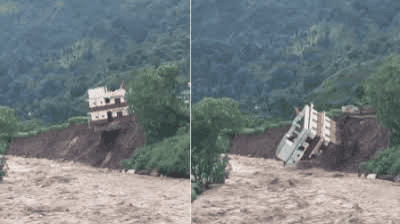
Nepal Landslide Disaster: Flood-Affected Building
The image shows a building standing beside fast-moving floodwater, illustrating the danger created when heavy rainfall causes rivers and drainage channels to swell.
Floodwaters surround a building in an area affected by Nepal’s recent heavy rainfall.
This image can be placed in the section discussing flooding and infrastructure damage so readers can visually connect the reported rainfall with the risks faced by communities.
Rescue Operations in the Nepal Landslide Disaster
Rescue teams have been deployed in several affected areas. Security personnel and local authorities have been working to reach communities cut off by landslides, damaged roads and rising water.
In Baglung, rescue teams have been sent to areas affected by landslides. Helicopter support has also been used in disaster response operations in the wider Gandaki region.
The Nepal landslide disaster has made access a major challenge. In mountainous districts, even a relatively short road blockage can isolate villages and delay medical assistance. Mud, debris, damaged bridges and unstable slopes can also make it dangerous for rescue teams to move into affected areas.
Authorities have urged people living near rivers, steep slopes and other vulnerable locations to remain alert and follow local warnings.
Nepal Landslide Disaster and the Wider National Impact
Although Baglung has recorded 12 deaths in the latest district-level update, the wider weather emergency has affected several parts of Nepal.
The Indian Express reported on September 29 that floods and landslides across Nepal had killed at least 21 people, with five others missing, while hundreds of homes had been damaged after torrential rainfall.
Earlier reports had recorded different national totals as rescue and assessment operations continued. This difference is important because disaster figures can change as authorities reach remote areas, identify victims and update missing-person records.
The Nepal landslide disaster has also affected transport, electricity and communications. In some places, rivers have crossed warning levels, while communities have been evacuated from areas considered vulnerable to flooding.
Warnings and Continuing Risks in the Nepal Landslide Disaster
Officials have continued to warn residents about the possibility of additional flooding and landslides. Rising river levels can remain dangerous even after rainfall begins to ease because water continues to flow downstream from saturated catchment areas.
The Nepal landslide disaster also highlights the importance of early warnings in mountainous communities. Local officials have said warnings and timely movement of people away from vulnerable locations helped prevent further casualties in some areas.
For residents and travellers, the immediate priority is to avoid unstable slopes, swollen rivers and damaged roads. Roads that appear passable can become dangerous if another landslide occurs or water levels rise.
Why This Nepal Landslide Disaster Matters
The Nepal landslide disaster is significant not only because of the loss of life but also because of the disruption to essential infrastructure. When roads, bridges, electricity networks and water systems are damaged at the same time, recovery becomes more complicated.
Baglung’s experience shows how quickly prolonged rainfall can affect homes and public services. The wider national situation also demonstrates how flood and landslide risks can spread across multiple districts at the same time.
The Nepal landslide disaster has also drawn attention online because videos showing a mountainside collapsing into a river have circulated widely. However, social-media footage should be treated carefully. The Indian Express noted that some circulating visuals had been enhanced using AI, making verification of the original footage important before using it as confirmed evidence.
What Happens Next After the Nepal Landslide Disaster?
The immediate focus remains rescue, relief and damage assessment. Authorities need to locate missing people, provide medical care, restore road access and reconnect essential services in affected communities.
For families who have lost homes or relatives, recovery will extend well beyond the end of the rainfall. Damaged roads and bridges may take time to repair, while communities in landslide-prone areas may require additional safety assessments.
The Nepal landslide disaster also underlines the importance of disaster preparedness in mountainous regions. Early warnings, evacuation plans, accessible roads and reliable communication systems can play an important role when extreme rainfall strikes.
Conclusion: Nepal Landslide Disaster 2026
The Nepal landslide disaster has caused a serious humanitarian and infrastructure emergency, with Baglung reporting 12 deaths and one person still missing as of September 29. Across the country, floods and landslides have damaged homes, roads, bridges, electricity systems and other infrastructure.
Rescue and relief operations are continuing, while authorities remain alert to further flooding and landslides. The situation is still developing, so casualty figures and damage assessments may change as teams reach more affected locations.
For readers following the Nepal landslide disaster, the most important information is to rely on verified updates from Nepalese authorities and established news organisations rather than unverified social-media posts.
FAQs
What happened in the Nepal Landslide Disaster 2026?
Heavy rainfall triggered floods and landslides across several parts of Nepal. Baglung was among the worst-affected districts, with 12 deaths and one person reported missing as of September 29.
How many people died in the Nepal Landslide Disaster?
In Baglung, authorities confirmed 12 deaths and one missing person. Separately, national reporting placed the wider Nepal flood-and-landslide death toll at at least 21 on September 29.
Which area was badly affected by the Nepal Landslide Disaster?
Baglung district was particularly affected, with deaths reported in Tarakhola, Tamankhola and Nisikhola rural municipalities.
Follow Khabar Khojo on Instagram
For the latest breaking news, India and world updates, business, markets, technology, sports, entertainment, lifestyle and exclusive stories, follow @officialkhabarkhojo on Instagram.
Also read more of such a news on our Global News




More Stories
Indian Pilot Smit Machchhar Helps Save Flydubai Flight
Sheikh Ahmed bin Rashid Al Maktoum Dies at 76: Dubai in Mourning
Statue of Unity Weather After Heavy Rain: Stunning Monsoon Views