
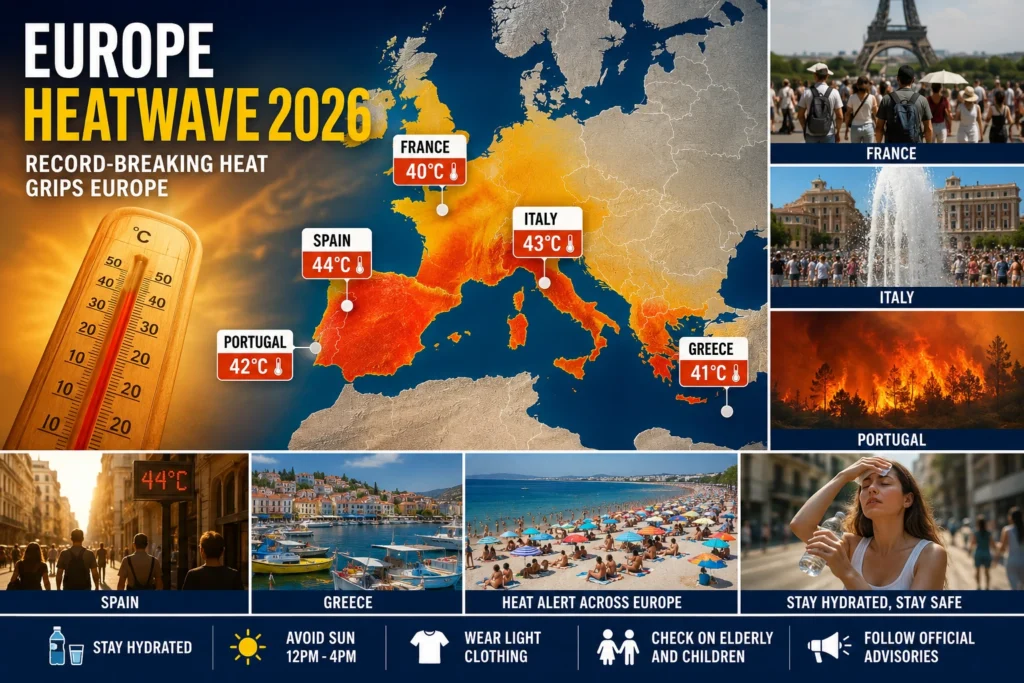
People walk through intense summer heat during the Europe Heatwave 2026 as several countries experience record-breaking temperatures.
Europe is facing one of its most intense summers in recent years as the Europe Heatwave 2026 pushes temperatures far above seasonal averages across several countries. From Spain and France to Italy, Portugal, and Greece, millions of people are dealing with scorching daytime temperatures, increased wildfire risks, pressure on healthcare systems, and disruptions to travel and public services.
Meteorologists say a persistent high-pressure system combined with hot air moving north from Africa has created ideal conditions for prolonged extreme heat. Climate experts also warn that rising global temperatures are making severe heatwaves more frequent, longer-lasting, and more intense across Europe.
Authorities have issued heat alerts in multiple regions, urging residents and tourists to stay hydrated, avoid unnecessary outdoor activities during peak afternoon hours, and monitor official weather advisories.
Key Takeaways
- Europe is experiencing one of the hottest summers of 2026.
- Spain, France, Italy, Portugal, and Greece are among the worst-affected countries.
- Temperatures are significantly above seasonal averages.
- Health authorities have issued heat-related safety advisories.
- Wildfire risks remain elevated in several southern European regions.
- Travel disruptions and increased electricity demand have been reported.
- Experts link the intensity of the heatwave to persistent weather patterns and long-term climate change.
Why Is Europe Experiencing Such Extreme Heat?
The Europe Heatwave 2026 is primarily being driven by a strong and persistent high-pressure weather system, often referred to as a “heat dome.” This atmospheric pattern traps warm air over large parts of Europe, allowing temperatures to rise steadily over several days.
Adding to the situation, extremely warm air masses from North Africa have moved into southern and central Europe, pushing temperatures well beyond normal summer levels.
Climate scientists explain that while heatwaves are naturally occurring weather events, global warming has increased their frequency, duration, and intensity. Rising average global temperatures mean that when heatwaves develop, they often become more severe than those experienced decades ago.
Countries Most Affected by Europe Heatwave 2026
Several European nations are facing dangerous temperatures and heightened emergency responses.
Spain
Spain has recorded some of the highest temperatures of the season. Authorities have issued multiple heat alerts while emergency services remain on standby for heat-related medical incidents and wildfire outbreaks.
France
Large parts of France continue to experience unusually hot conditions. Local authorities have advised residents to avoid outdoor activities during the hottest hours and to protect elderly citizens and children.
Italy
Italy has implemented public health advisories across several regions as temperatures continue climbing. Popular tourist destinations are also witnessing increased pressure due to extreme weather conditions.
Portugal
Portugal remains under elevated wildfire risk as dry conditions and strong heat combine to create dangerous fire weather.
Greece
Greece continues monitoring forests and vulnerable regions closely while emergency services remain prepared for possible wildfire emergencies during the ongoing heatwave.
How Europe Heatwave 2026 Is Affecting Daily Life
The ongoing heatwave is influencing nearly every aspect of daily life across Europe.
Health Concerns
Hospitals and healthcare providers are preparing for an increase in heat-related illnesses, including dehydration, heat exhaustion, and heatstroke. Elderly people, young children, and individuals with chronic illnesses remain the most vulnerable.
Electricity Demand
Air conditioning and cooling systems are operating at full capacity across many cities, causing electricity demand to rise significantly. Energy providers continue monitoring the power grid to maintain stable electricity supplies.
Transport Disruptions
Extreme temperatures have affected transportation services in several regions. High heat can impact railway infrastructure, road surfaces, and airport operations, leading to delays and operational adjustments.
Wildfire Threat
Dry vegetation combined with prolonged high temperatures has significantly increased wildfire risks across southern Europe. Firefighters remain on high alert as authorities closely monitor vulnerable forest areas.
Government Response
Governments across Europe have introduced a range of emergency measures to reduce the impact of the Europe Heatwave 2026. Local authorities have issued heat alerts, expanded emergency medical services, and opened cooling centres in several cities to help residents cope with the extreme temperatures.
Public health agencies are urging people to:
- Stay hydrated by drinking plenty of water.
- Avoid outdoor activities during the hottest part of the day.
- Wear lightweight, light-coloured clothing.
- Check regularly on elderly family members, neighbours, and people with medical conditions.
- Keep homes cool by closing curtains during the day and ventilating during cooler hours.
Emergency services continue to monitor weather conditions and remain prepared to respond quickly to heat-related incidents and wildfire emergencies.
What Travellers Should Know
Tourists visiting Europe during the Europe Heatwave 2026 should take additional precautions before travelling or spending long periods outdoors.
Stay Updated
Check official weather forecasts and follow local government advisories for heat warnings and travel updates.
Carry Drinking Water
High temperatures can quickly lead to dehydration, particularly while sightseeing or travelling between cities.
Wear Appropriate Clothing
Choose lightweight, breathable clothing, sunglasses, and a wide-brimmed hat to reduce exposure to direct sunlight.
Plan Outdoor Activities Carefully
Visit major attractions early in the morning or later in the evening when temperatures are generally lower.
Watch for Heat-Related Symptoms
Seek immediate medical attention if symptoms such as dizziness, confusion, rapid heartbeat, severe headache, or fainting occur.
Climate Change and Rising Heatwaves
Scientists continue to study the connection between climate change and increasingly severe heatwaves across Europe. While natural weather patterns influence individual heat events, long-term warming trends have increased the likelihood of prolonged periods of extreme heat.
Higher global temperatures contribute to:
- More frequent heatwaves
- Longer-lasting extreme weather events
- Increased wildfire risk
- Greater pressure on healthcare systems
- Higher energy consumption during summer months
Climate experts say improving resilience through better urban planning, stronger emergency response systems, and public awareness will become increasingly important as extreme weather events become more common.
What Experts Are Saying
Meteorologists explain that persistent high-pressure systems, combined with hot air masses moving from North Africa, are responsible for the unusually high temperatures affecting much of Europe.
Environmental experts also emphasize the importance of adapting infrastructure, improving heat preparedness, and reducing long-term climate risks through sustainable policies and environmental protection measures.
Frequently Asked Questions (FAQs)
What is Europe Heatwave 2026?
Europe Heatwave 2026 refers to a period of unusually high temperatures affecting several European countries, including Spain, France, Italy, Portugal, and Greece.
Which countries are most affected?
Spain, France, Italy, Portugal, and Greece are among the countries experiencing the highest temperatures and increased wildfire risks.
Why is Europe experiencing such extreme heat?
Meteorologists attribute the heatwave to a persistent high-pressure system combined with warm air moving north from Africa. Climate change is also increasing the frequency and intensity of extreme heat events.
How can people stay safe during a heatwave?
People should drink plenty of water, avoid direct sunlight during peak afternoon hours, wear lightweight clothing, stay indoors when possible, and follow official health advisories.
Can the heatwave affect travel?
Yes. Extreme temperatures may cause transport delays, increased wildfire risks, changes to outdoor tourism activities, and disruptions to some public services.
Conclusion
The Europe Heatwave 2026 has become one of the most significant weather events of the year, affecting millions of people across the continent. Record-breaking temperatures have placed pressure on healthcare systems, increased wildfire risks, disrupted transportation, and challenged everyday life in several countries.
As weather conditions continue to evolve, residents and travellers alike should remain informed through official weather updates and follow public safety guidance. Preparing for extreme heat, staying hydrated, and taking sensible precautions can significantly reduce health risks during prolonged periods of high temperatures.
Follow Khabar Khojo
Stay informed with Khabar Khojo for trusted coverage of breaking news, India, world affairs, business, markets, technology, sports, entertainment, lifestyle, and exclusive stories.
📸 Follow us on Instagram: @officialkhabarkhojo https://www.instagram.com
Visit KhabarKhojo.com for the latest verified news, in-depth analysis, and real-time updates from India and around the world.
Also read Worldwide News‘s in Global News category only on khabarkhojo.com
Sources
- Reuters: https://www.reuters.com/
- World Meteorological Organization (WMO): https://wmo.int/
- Copernicus Climate Change Service (C3S): https://climate.copernicus.eu/
- European Centre for Medium-Range Weather Forecasts (ECMWF): https://www.ecmwf.int/



More Stories
BRICS Summit 2026 September 12: Major Decisions
Modi Putin BRICS Summit 2026: Positive Power Shift
August 2026 Hottest Month on Record: Critical Risk